成就的快慢取决于……



点击收听英文朗诵
Reverence
佛法的真实利益
从恭敬心中求
我们一打开经典,这当下就是超时空的,佛陀无漏的光明的悲悯就展现出来。这种悲悯不是世间的情感。佛是有体、相、用的。这个用不离佛的相,这个相不离佛的本体。因为佛的本体是超时空的,所以祂的相也是超时空的,祂的用也是超时空的。
当一位法师在讲法的时候,无论说的是大乘法,还是小乘法,都是超时空的。为什么?他说小乘法的发心是大乘的。说小乘法是为了度小乘根基的众生。
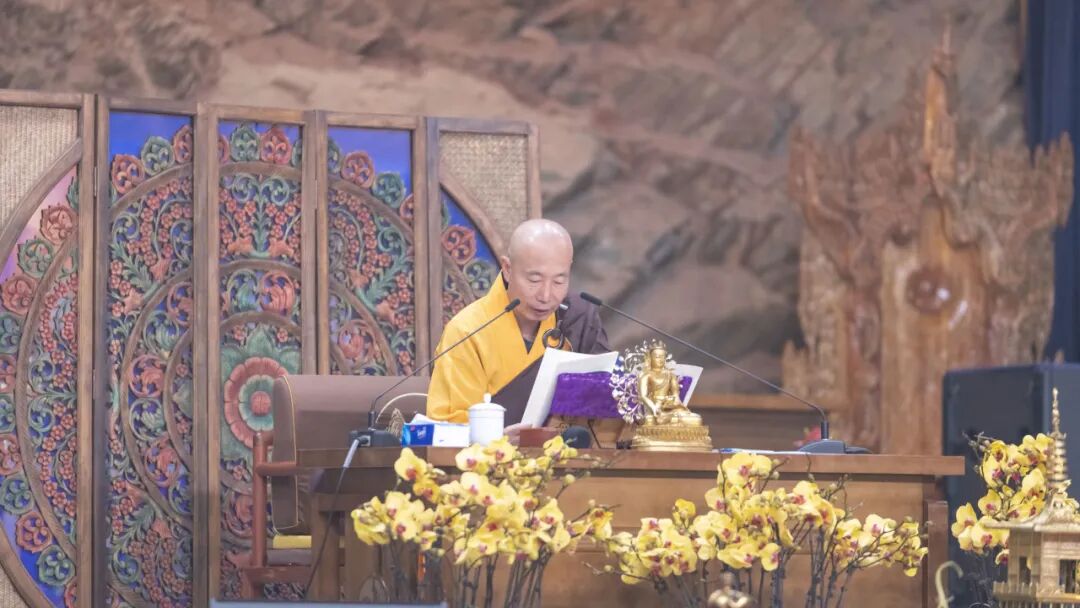
所以,只要是佛法,我们恭敬,就必然会得到祂的功德。印光大师说:“欲得佛法实益,须向恭敬中求。有一分恭敬,则消一分罪业,增一分福慧。有十分恭敬,则消十分罪业,增十分福慧。”不仅开卷要如面圣容,我们通过影像看到一位法师的音容笑貌时,也要充满感激之情。在感恩心当中,我们才能够跟法师的心——那种弘法的悲智之心相应。如果他在那儿讲,我们冷眼旁观、吊儿郎当、玩世不恭,那我们是感受不到佛法的力量的。

佛教里说,佛法音声所在之处即为有佛。一位法师在座上弘法,即是佛现前。更进一步说,作为佛弟子,释迦佛陀出世的时候,我们业障重,没遇到,但在这个末法时代,竟然还有善知识显现跟我们一样的凡夫身,来度化我们这些刚强众生,不舍不弃,所以,我们对善知识的这种感恩心要生起来。
如果真的有了这样的感恩心,那自然而然地,我们看着他讲法就会眼中含泪;听到他的每一句话都会震动我们的耳膜,震动我们的心灵,震动我们内在的智慧体。然后,我们如来藏里的功德体慢慢就会现出来,众生无明业障的部分就开始净化掉。
听法时的心
决定了我们成就的速度
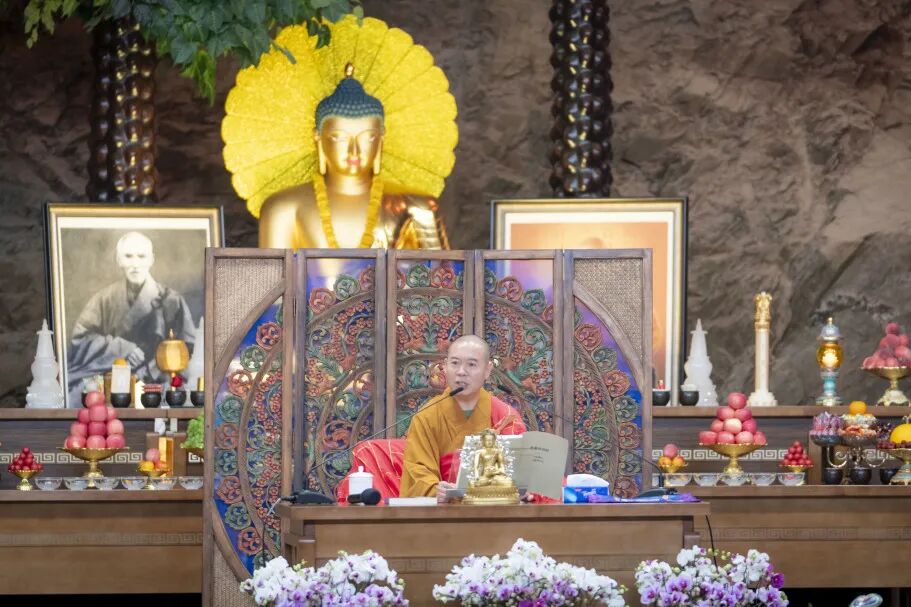
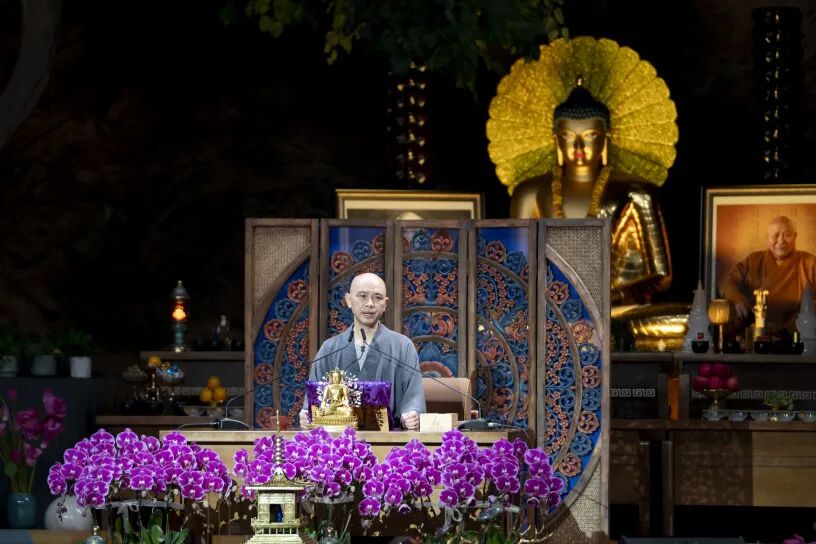
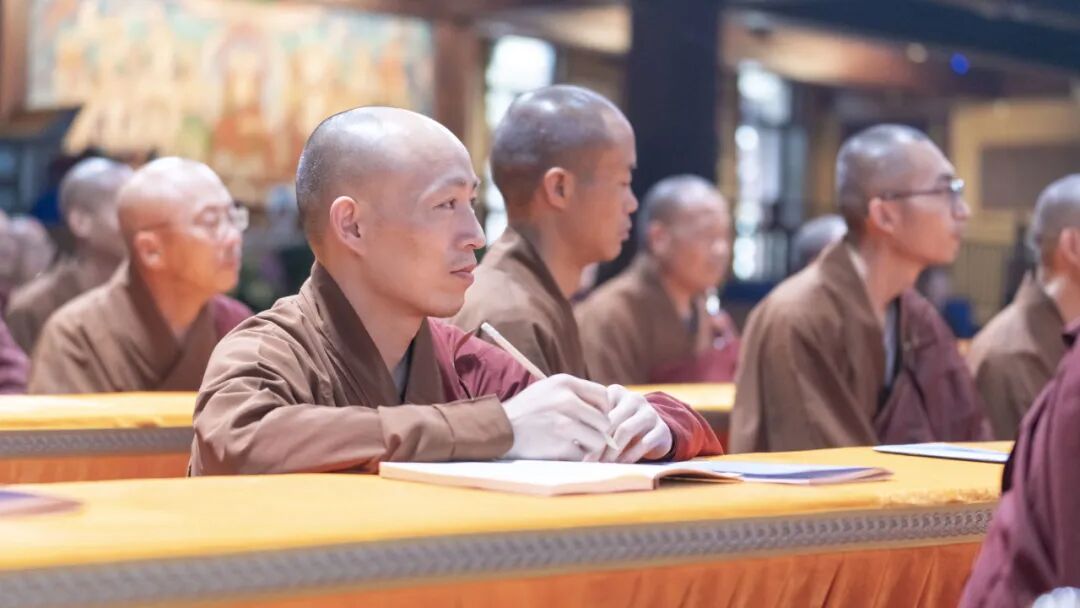
听法时的心,决定了我们的根性、决定了我们成就的速度。每个人成就的速度是不定的,成就的快慢取决于听法的质量。听法的心态越好、质量越好,闻法的受益就越大,就越消业障、开智慧。虽然都是一座法下来,但是个个受用不同。为什么?因为闻法状态不同。所以,法师也讲到,众生根器各有差别。根器不是一定法,这里都是有经验的,都是有状态的。
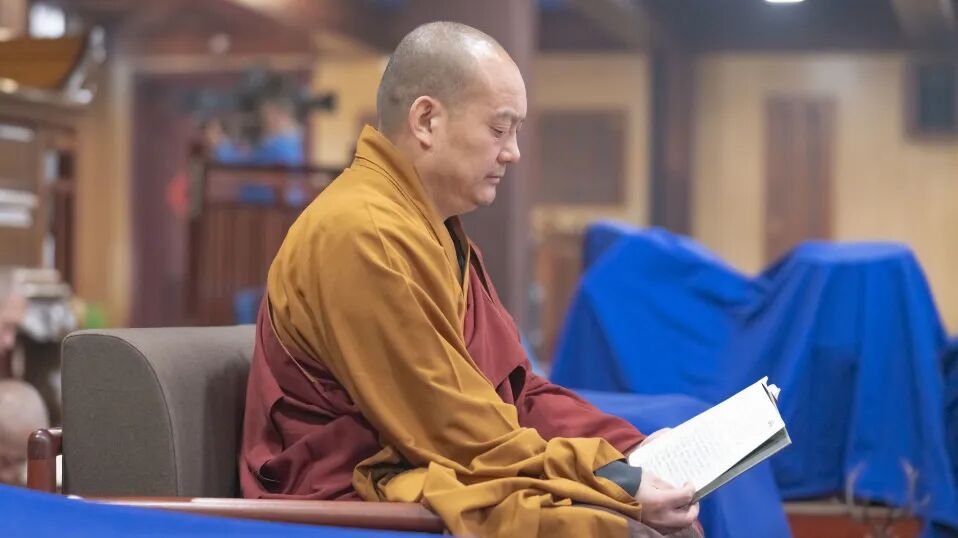
所以,以后我们要养成这种习惯,听法前先要发菩提心。当看到法师的时候要合掌感恩。那种感恩心是什么样的呢?就是一位讲经法师出现了,我们对他身口意的恭敬,那种感恩,那种难遭难遇想,是要超过对佛陀的。
佛像二十四小时站在那里,微笑着,祂不会开口跟我们讲话的。但法师能替佛宣扬,因为他是这个时代的人、跟我们有共同的业缘,能把如来的真实义告诉我们,让我们明白。他传递了佛的智慧,深入浅出地让我们明白佛的密意,他成就了我们了生脱死的决定性受用。
如果我们不在法上下功夫,我们对佛法内在的领悟是不会随着岁月的流逝而改变的。石头过了一百年还是石头,沙子蒸了一百年也只名热沙,不名为饭。但是佛弟子听经闻法了就不一样了,会每天改变,日日不同。

HAPPY HOUR
ENGLISH
向上滑动阅览完整版英语翻译
Speed of Attainment Depends on...
True Benefit of the Buddha Dharma Derives from Reverence
The very moment we open a sutra, the present becomes transcendent—beyond time and space—and the Buddha’s untainted, luminous compassionate mercy is revealed. This compassion is not a worldly emotion. The Buddha embodies essence, form, and function—Dharmakaya, Sambhogakaya, and Nirmanakaya. The function of the Buddha cannot be separated from the form, and the form cannot be separated from the essence. Because the Buddha’s essence transcends time and space, so too do the Buddha’s form and function.
Whenever a Dharma Master expounds the Dharma—be it Mahayana or Theravada—his teaching is beyond time and space. Why? Because the very aspiration that prompts him to speak the “the Theravada Vehicle” is of Mahayana. He teaches Theravada solely to guide those beings whose spiritual root accords with that vehicle.
Thus, as long as we revere the Buddha-Dharma, its merit will surely flow to us. Master Yìn Guang teaches us: “The true benefit of the Dharma is found only in reverence. One portion of reverence wipes out one portion of negative karma and adds one portion of blessing and wisdom; ten portions of reverence wipes out ten portions of negative karma and adds ten portions of blessing and wisdom.”Therefore, not only should we open the sutras as if we were standing face-to-face with the Buddha himself, but we should also meet even a master’s voice or image—be it only through a screen—with heartfelt gratitude. Only with a heart of gratitude can we accord with the master’s heart: a heart of compassion and wisdom dedicated to spreading the Dharma. If we remain cold, casual, or cynical while the Dharma is being expounded, we will never feel the power of the Dharma.
The Buddha himself is present wherever the voice of the Dharma resounds. When a Dharma master expounds the teaching from the Dharma-seat, it is none other than the living Buddha appearing before us.To go further: we, the disciples of the Buddha, were burdened by such heavy karmic obstacles that we failed to encounter Shakyamuni during his earthly life. Yet now, in this Dharma-ending age, virtuous teachers still manifest as ordinary beings just like us, refusing to abandon us stubborn and unruly sentient beings. For this boundless kindness, we should feel heartfelt gratitude toward these virtuous teachers.
When such gratitude truly arises, it is only natural that our eyes are filled with tears as we watch him expound the Dharma. Every word he utters reverberates through our eardrums, vibrates our mind, and stirs the core of our innate wisdom. From the depths of our treasury of Tathagata, the essence of merit and virtue begins to surface, while the mass of ignorance and karmic hindrances is slowly purified.
The Mind that Listens to the Dharma
Determines How Soon We Attain
The state of mind with which one listens to the Dharma determines one's spiritual root and the speed of one's attainment. The pace of attainment is not fixed; it depends on the quality of one's listening. The better the mindset and the higher the quality of listening, the greater the benefit derived from the Dharma—more karmic obstacles are purified, and wisdom is more readily awakened. Even when attending the same Dharma talk, each person receives spiritual benefit in different ways. Why? Because their states of mind differ. As the Dharma master has said, sentient beings vary in their spiritual roots. Yet spiritual root is not fixed—it is shaped by experience and by one's inner state.
Therefore, from now on we should train ourselves to form such a habit: Before listening to the Dharma, first arouse Bodhicitta; the moment we see the Dharma master, join our palms and let gratitude fill the mind. What kind of gratitude? We regard the appearance of a Dharma master as an event even rarer—at this instant—than the historical presence of the Buddha himself. Reverence in body, speech and mind flows spontaneously; we feel so grateful just like we have stumbled upon a treasure that is all but impossible to meet.
A Buddha statue may stand there twenty-four hours a day, smiling, yet the statue will never open its mouth to speak. A Dharma master, however, can speak on the Buddha’s behalf. Born in our own age and sharing our karmic conditions, he is able to proclaim the Tathagata’s real meaning and make us understand. He transmits the Buddha’s wisdom, unfolds the hidden intent of the teachings in language we can grasp, and thereby grants us the decisive benefit that frees us from birth-and-death.
Unless we actually put forth effort in the Dharma, our inner grasp of it will not deepen with the mere passage of time. A stone is still a stone a hundred years later; sand heated for a century is merely hot sand—it is never mistaken for cooked rice. Yet once a disciple begins to hear and reflect upon the Dharma, day-to-day transformation begins: Each dawn finds him not quite the same person who goes to sleep the night before.
翻译:张蜜
朗诵:妙心


- 相关文章
- · 解脱与轮回,就在于”我“
- · 有没有功德,要看修行人自己的状态
- · 福城文殊寺专题学习二十届四中全会精神暨“学法规、守戒律、重修为、树形象”教育活动
- · 谛闲大师 | 经书不可不读
- · 寻“常”之路
- · 北纬30°的“福地”密码:“德”与“位”的相互成就
- · 谛闲大师 | 以净土法门自度度人
- · 这一刻,永远是对准备好的人
- · 如果心中对佛法有了真实的感受,一定要守护住
- · 谛闲大师 | 末世修行,无越于净土一门
- · 觅罪不可得 解缚无人施〡禅宗三祖僧璨大师圆寂纪念
- · 修行的苦是值得的
- · 云居山的老和尚们走的时候都有一个特点
- · 此心安稳,何处不修行
- · 怎么做会得到三宝的加持?
- · 【农历十月十一】憨山大师圆寂纪念日
- · 寒衣节 | 最寒冷的季节 最温暖的思念
- · 恭迎药师佛圣诞|琉璃光曜,普照十方
- · 恭迎观世音菩萨出家日 | 出家,出尘,入圆通
- · 恭迎摩利支天菩萨圣诞 | 这位菩萨,亦是观世音菩萨的变化相